

.svg)
Can you really become a manufacturing technician in three to six months? The answer is yes, but with conditions.
A decade ago, the answer would have been no. Technicians needed years of hands-on training. That’s changed. Today, rapid reskilling in Georgia manufacturing is happening at scale. If you’re facing a layoff-to-manufacturing transition, stuck in underpaid work, or switching careers, speed matters. Bootcamps, compressed community college pathways, and employer-sponsored programs move people from unemployment into entry-level technician roles in weeks to months, not years. You’ll get productive fast. You won’t have the same depth as someone who finished a traditional two-year degree. But you’ll have a real paycheck and the skills Georgia manufacturers need right now.
Georgia’s manufacturing sector runs on technicians. Auto suppliers, food processing plants, precision metalworking, and advanced manufacturing facilities across the state are hiring. The traditional pathway leaves too many positions unfilled. Fast-track programs fill that gap.
This article covers what’s real in rapid training and what’s hype. You’ll explore your options, understand costs, see what skills you’ll gain, and learn what happens to people who take this route.
Yes, if you mean “ready to start work.” No, if you mean “fully qualified.” Three- to six-month programs teach fundamentals and safety needed for entry-level roles. Most employers expect you to continue learning on the job for a year or two.
A traditional technician role requires broad knowledge: troubleshoot automated equipment, read schematics, understand electrical circuits, perform maintenance, and work safely around machinery. A two-year associate degree covers this methodically.
Fast-track programs compress essentials. You learn machinery operation, basic electrical safety, CMMS systems, lockout-tagout procedures, and troubleshooting. Training is intense, forty to fifty hours per week. You focus on what gets you productive in six weeks instead of two years.
Can you perform every task a two-year graduate can? No. You’re not ready for predictive maintenance or advanced diagnostics alone. But you can start. Many employers hire fast-track graduates for entry-level roles and pair them with experienced technicians for six to twelve months. Learning continues on the clock, often paid.
Retention rates among Georgia fast-track graduates are solid. Employers report that graduates who stay committed learn quickly, closing the gap within a year.
The catch: fast-track programs work best if you’re committed to continued learning. If you see it as a bridge to income and ongoing skill-building, it’s legitimate. Manufacturing Georgia resources help you evaluate programs based on Georgia employer demand.
| Program Type | Duration | Cost | Best For |
|---|---|---|---|
| Private bootcamps | 8–12 weeks | $3,000–$8,000 | Career changers with cash on hand |
| Community college accelerated | 4–8 months | $1,500–$3,500 | Working students pursuing an accelerated technician program in Georgia |
| Employer-sponsored | 8–16 weeks + work | $0 tuition | Income-focused candidates needing urgent manufacturing training in Georgia |
Fast-track technician training in Georgia through private bootcamps runs eight to twelve weeks, five days a week. They cost $3,000 to $8,000 upfront. Quality varies. The best partner with employers who help design curriculum and commit to hiring graduates. Look for programs that use real equipment in labs, not software simulations.
Compressed community college programs span four to eight months at $1,500 to $3,500. Community colleges receive state subsidies. The advantage: credentials are recognized across employers, instructors are experienced, and you learn the same core as traditional students, just faster.
Employer-sponsored quick manufacturing technician programs in Georgia are the newer model. Amazon, for example, funds rapid training through Career Choice. The Mechatronics and Robotics Maintenance course combines equipment-specific training with broader manufacturing skills. Intel and Werner Enterprises run similar schemes. You train while working, get paid during training, and transition to technician roles after graduating.
Most Georgia graduates landed jobs within three months.
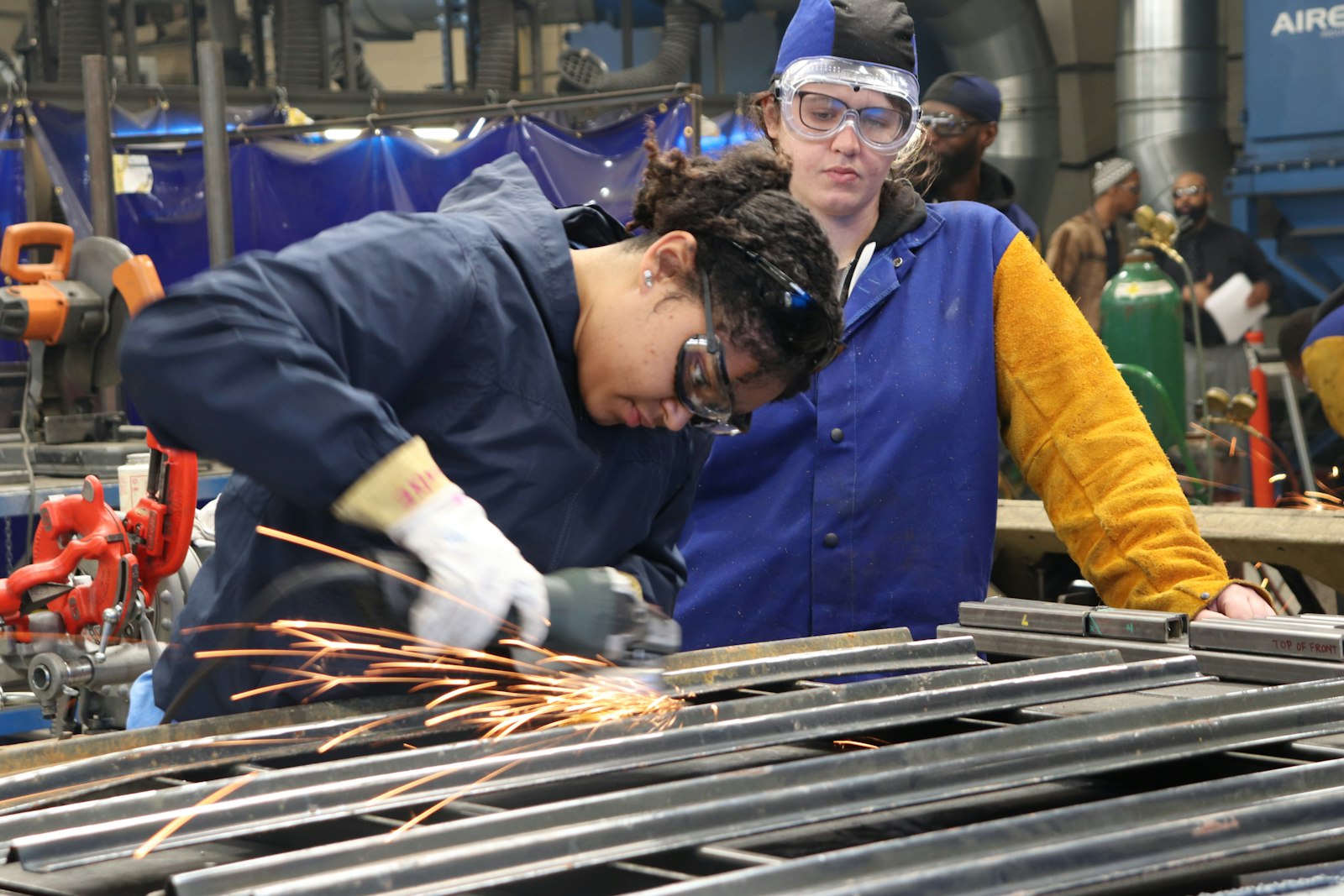
Fast-track programs prioritize hands-on, immediate skills. You’ll learn to operate and troubleshoot specific equipment, practice LOTO procedures, electrical safety, basic PLC logic, and read maintenance manuals. Your training is anchored to real problems.
What you won’t learn deeply: predictive maintenance, electrical system design, advanced troubleshooting for unfamiliar equipment, or leadership skills. Those come later, after you’ve logged hours on the job.
Georgia employers know this. They don’t expect a bootcamp graduate to diagnose a failed motor alone. They expect you to follow procedures and ask the right questions. Most fast-track hires are paired with a senior technician. Some employers fund Foundations of Automated Equipment Maintenance or certifications like MSSC CPT after you’ve proven yourself.
Employer sponsorships flip the traditional hiring model.
Traditionally, you finish training, interview, then get hired. That lag costs time. Some fast-track programs eliminate it: employers hire you during training.
An employer partners with a training provider to run a cohort-based program. You apply to the employer first, not the school. The employer hires you into a trainee role, usually entry-level warehouse or assembly, at roughly $16 to $20 per hour. While there, the employer pays for your technician training, which runs two to four evenings or two days a week.
You earn while learning. After eight to sixteen weeks, when you pass training and certifications, you transition to a technician role at $22 to $28 per hour for entry-level positions in Georgia. You’ve been with the employer the whole time, so there’s no interview gap.
Amazon Career Choice is the largest example. The model is spreading; more Georgia manufacturers adopt it each year.
The downside: you’re locked into one employer during training (usually twelve to eighteen months total). You can leave, but you may owe tuition back. Clarify before signing.

A full two-year Georgia community college degree runs $5,000 to $12,000 in tuition, plus books and two years of lost income. Fast-track programs are cheaper upfront.
Private bootcamps range from $3,000 to $8,000, paid upfront. That’s a barrier if you’re living paycheck to paycheck.
Community college accelerated programs cost $1,500 to $3,500 because of state subsidies. You can work part-time, so opportunity cost is lower.
Employer-sponsored programs cost you zero tuition. You earn $16 to $20 per hour while training. This is the gold standard for tight finances.
Financial help exists:
Spend $2,000 to $4,000 on fast-track training, earn $18 per hour for six months after completion, and you’ve recovered your investment.
Yes, but not all programs are equal, and not all graduates succeed.
Georgia employers report that bootcamp and accelerated-program graduates hired by sponsoring employers have retention rates of roughly 70 to 80 percent after one year. That’s in line with traditional hires. Those who leave often do so for better pay elsewhere, not because they’re failing. Employers report that fast-track hires who stick around for eighteen months are indistinguishable in competence from two-year-degree hires by year two.
But data skews toward sponsorship. Bootcamp graduates without an employer lined up face a harder job search. Most do get hired, but it takes longer (three to six months versus immediate placement). Some find work in maintenance at smaller manufacturers, others at food processing plants, some in warehouse roles that evolve into technician work. The market for entry-level technicians is active.
A real risk: poor-quality bootcamps. Some charge $4,000 to $6,000 and deliver weak training with outdated equipment. To avoid this, look for programs that partner with actual employers, use real equipment not simulations, include lab time (minimum 30 percent of hours), and offer job placement support.
Georgia community colleges are more regulated, so risk is lower. Bootcamps vary widely. Do your homework.
If you enroll in a reputable fast-track program aligned with Georgia’s manufacturing demand with employer backing, your prospects are good.
Three-month technician certification programs in Georgia teach entry-level fundamentals and safety. Yes, you can be ready to start work. No, you won’t be fully qualified. Most employers expect continued learning on the job for a year or two.
Quick manufacturing technician programs in Georgia combined with employer partnerships see most graduates land jobs within three to six months. Your odds improve significantly with employer partnerships or placement support. Community college programs often have better placement because credentials are widely recognized.
Private bootcamps run $3,000 to $8,000. Community college accelerated programs cost $1,500 to $3,500. Employer-sponsored programs cost you zero tuition. Financial help is available: Pell Grants, Georgia Work-Ready Grants, and employer reimbursement.
It depends on structure. Full-time bootcamps (forty to fifty hours per week) make work difficult unless part-time evenings. Compressed community college programs often run two to four days a week and are designed for working students. Employer-sponsored programs build in work—you’re earning while training. Ask the provider how many hours per week training requires.
There’s no single required certification. Most entry-level jobs require a high school diploma and training completion. Some employers prefer MSSC CPT, OSHA 10, or equipment-specific certifications. Ask your target employers what they value before choosing a program.
It depends on the program and employer agreement. Most allow one retake at no charge if you fail an exam but attended all sessions. Employer-sponsored programs typically commit to your success because they’ve invested. Bootcamps have no such obligation. Clarify the policy before enrolling. For technician retraining in Georgia, this is an important question to ask upfront.
Fast-track programs aren’t shortcuts for the uncommitted. They’re structured pathways for people who need speed. If you’re facing unemployment or a career shift that can’t wait two years, a three- to six-month program moves you into productive work fast. The trade-off is learning depth, which you build on the job.
The decision comes down to your situation. Do you have stable income and can invest time? A traditional degree gives you broader knowledge. Do you need income urgently? Fast-track is the real alternative.
Georgia manufacturers are hiring now. That urgency works in your favor; employers invest in your growth once you’re on board.
If fast-track feels right for your situation, start by exploring your options: bootcamp cohorts starting this month, community college accelerated programs, or employer-sponsored pathways if you’re already connected to a manufacturer. Discover training programs aligned with manufacturing career paths in Georgia and connect with employers actively hiring technicians.