
.svg)
Manufacturing technician specialization salary georgia varies significantly by role, creating important earnings differences across CNC, electrical, welding, maintenance, instrumentation, and robotics paths. This guide compares these six core specializations by starting salary, five-year earnings, job demand, and training return on investment. Your choice shapes your first-year earnings and career trajectory.
Whether you're exploring paths fresh from high school or pivoting from another career, understanding these specializations helps you choose based on real wage patterns and market need. Unmudl offers industry-focused training paths designed to match what Georgia employers need right now.
Georgia's manufacturing sector spans food processing, automotive, aerospace, industrial equipment, and chemical manufacturing. Technicians work across all these industries, but certain specializations command higher starting salaries. The difference comes down to equipment complexity, required certifications, and how urgently employers need to fill those roles. Below, we compare six core specializations that hire steadily in Georgia, roughly ranked by starting salary and long-term earning potential.
CNC (computer numerical control) technicians set up and operate precision cutting machines that shape metal, plastic, and composite parts. They load blueprints into machine software, adjust tool paths, monitor production runs, and troubleshoot when cuts go out of tolerance. CNC machining is core to automotive, aerospace, and industrial equipment manufacturing across Georgia. CNC technician salary georgia is among the highest in the field because experienced programmers earn substantial increases by specializing in advanced materials or five-axis programming. Employers consistently report difficulty filling CNC roles, especially for experienced programmers who optimize complex tool paths. Entry typically requires completion of a CNC machining program or apprenticeship (usually six months to one year), though some employers hire based on prior shop experience. MSSC Certified Production Technician (CPT) certification strengthens job prospects.
Industrial maintenance technician pay georgia ranks among the highest in the technician field because downtime costs thousands of dollars per hour. Employers value these roles highly. They perform preventive maintenance (cleaning, lubrication, belt replacement), troubleshoot breakdowns, and repair motors, pumps, hydraulic systems, and conveyors. This role is the backbone of any manufacturing facility, so employers prioritize filling these positions quickly. Across Georgia, industrial maintenance roles are among the most consistently hired technician positions. Equipment needs repair in every facility, every day. Technicians in this specialty see strong five-year income growth as they develop expertise in specific systems (hydraulics, pneumatics, electrical motor control). Entry requirements vary by employer. Many prefer OSHA 10 safety training, and some seek technicians with CMMS (computerized maintenance management systems) experience. An industrial maintenance apprenticeship or community college program typically takes 12 to 24 months.
Electrical technicians install and maintain industrial wiring, control panels, and power distribution systems. They read single-line diagrams, troubleshoot blown circuits, replace starters and relays, and ensure machines get safe, stable power. Electrical technician salary georgia remains consistently strong across the state because every facility requires ongoing electrical work. Every facility has electrical systems, making this expertise perpetually needed. Technicians typically earn solid mid-to-high starting salaries and see steady growth with experience. Entry usually requires either an electrical apprenticeship (four to five years for a journeyperson card) or a shorter technician certificate program (12 to 18 months). Some employers hire without formal credentials if you have hands-on experience. OSHA electrical safety training is increasingly standard.
Welders join metal parts using multiple processes (MIG, TIG, stick, flux-core) to create pressure vessels, structural components, and assemblies. Welding is both an art and a precision skill; bad welds fail inspection and compromise safety. Across Georgia manufacturing, welding shops produce goods for shipping, HVAC, automotive, and heavy equipment industries. Welding technician pay georgia is competitive and builds quickly as specialists master stainless steel, aluminum, or exotic alloy welding. The two-year outlook for welding is strong; many current welders are nearing retirement and employers struggle to find replacements. Entry requires either an apprenticeship or a welding certificate program (typically six months to two years depending on depth). AWS (American Welding Society) certifications, such as GMAW (MIG) or GTAW (TIG), are the industry standard and often required by employers or customers.
Instrumentation technicians maintain sensors, analyzers, and control loops that measure and regulate temperature, pressure, flow, and chemical composition in manufacturing processes. PLC technician earnings georgia, especially for programmable logic controller specialists, approach instrumentation salaries as automation accelerates across the state. They calibrate instruments, diagnose sensor failures, and keep automated systems running smoothly. Petrochemical, pharmaceutical, food processing, and advanced materials manufacturers all need instrumentation support. This specialty offers higher starting salaries than entry-level CNC or electrical work because the learning curve is steep. A technician who understands loop tuning and signal transmission becomes hard to replace. Georgia's refining and chemical manufacturing sectors drive steady demand for these roles. Entry typically requires an instrumentation certificate or associate degree (12 to 24 months). Unmudl's Instrumentation and Control Technician courses, including the Amazon-designed fundamentals program, prepare technicians for entry-level roles in weeks rather than months. Some employers prefer candidates with NATE (North American Technician Excellence) certification or prior apprenticeship experience.
Robotics technicians program, maintain, and repair robotic arms and automated systems used in assembly, material handling, and welding. As manufacturing plants adopt automation to stay competitive, robotics skills have become a fast-growing specialization. Technicians troubleshoot robot arm faults, reprogram tool paths for new product lines, and integrate hardware changes when production shifts. Starting salaries for robotics technicians tend to be at the higher end because the skills are specialized and newer workers are scarce. Demand is accelerating; Georgia's automotive and aerospace sectors are expanding robotic lines aggressively. Entry usually requires either a dedicated robotics certificate program (12 to 18 months) or transition from CNC or electrical backgrounds. Some technicians combine robotics training with prior shop experience. Recognized certifications vary by robot brand (ABB, FANUC, Yaskawa), and manufacturers often provide proprietary training once hired. Unmudl offers advanced robotics and automation training designed to meet what employers need right now.
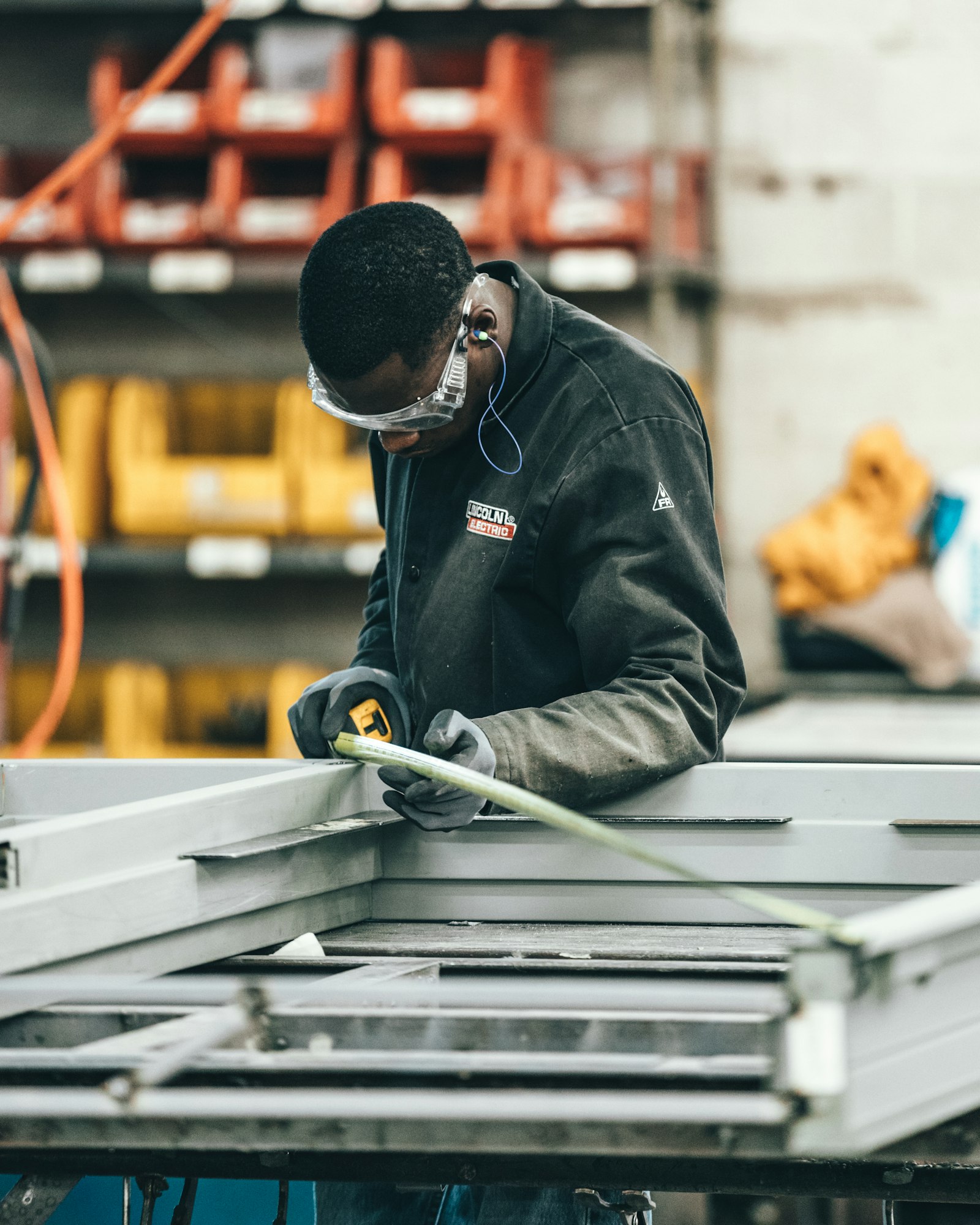
Comparing first-year salary to five-year salary reveals which specializations offer the steepest income growth. In Georgia, most manufacturing technicians start somewhere in the $30,000 to $40,000 range annually. The trajectory diverges significantly by specialization.
CNC technicians who pursue advanced programming skills or specialize in exotic materials often see 40 to 50 percent salary growth by year five. Industrial maintenance technicians track similarly, especially if they earn CMMS expertise or supervisor certifications. Welding technicians' five-year earnings vary more widely depending on whether they stay at hourly rates or transition to positions like welding inspector or lead technician. Instrumentation technicians tend to see steady growth as specialized knowledge becomes more valuable. By year five, many approach or exceed the $50,000 to $60,000 range.
Salary alone doesn't capture the full picture. Some specializations hit their peak earning potential faster (robotics might jump 30 percent by year three) while offering less cushion during downturns. Others, like maintenance and electrical work, show slower early growth but more stability. Equipment always breaks and needs fixing. Stability matters as much as peak pay when planning your career.
Pursuing relevant certifications accelerates salary growth significantly. A technician who earns CMRP (Certified Maintenance and Reliability Professional) or AWS welding credentials typically sees a 10 to 20 percent salary bump within a year. Community colleges across Georgia offer these paths, and some employers subsidize tuition through training reimbursement programs.
Georgia's manufacturing job postings tell you where hiring is hottest right now. Industrial maintenance and CNC technicians remain the most commonly posted roles because nearly every manufacturer needs these skills. But growth rates differ significantly.
Robotics and automation technician positions are expanding fastest in Georgia's automotive, aerospace, and advanced materials sectors. Job postings for these roles have grown 15 to 20 percent over the past two years as plants modernize. Companies retool production lines and need technicians who can maintain new equipment immediately. Welding and HVAC technician roles post consistently but without rapid acceleration. These are always hiring specializations rather than in hot demand ones.
Instrumentation technicians see steady demand from petrochemical refineries, pharmaceutical manufacturers, and food processors across the state. Georgia's chemical corridor around Southeast Georgia and the Atlanta metro area offers concentrated opportunity.
Check job boards like LinkedIn Jobs, Indeed, or the Georgia Department of Labor's labor market information to see what's actually hiring in your region. Robotics, CNC programming, and industrial maintenance are where Georgia employers are posting aggressively. BLS data projects manufacturing employment will remain stable through 2034, though automation may reduce total headcount. Technicians who specialize in maintaining automation systems see the strongest growth, not the jobs being automated away.
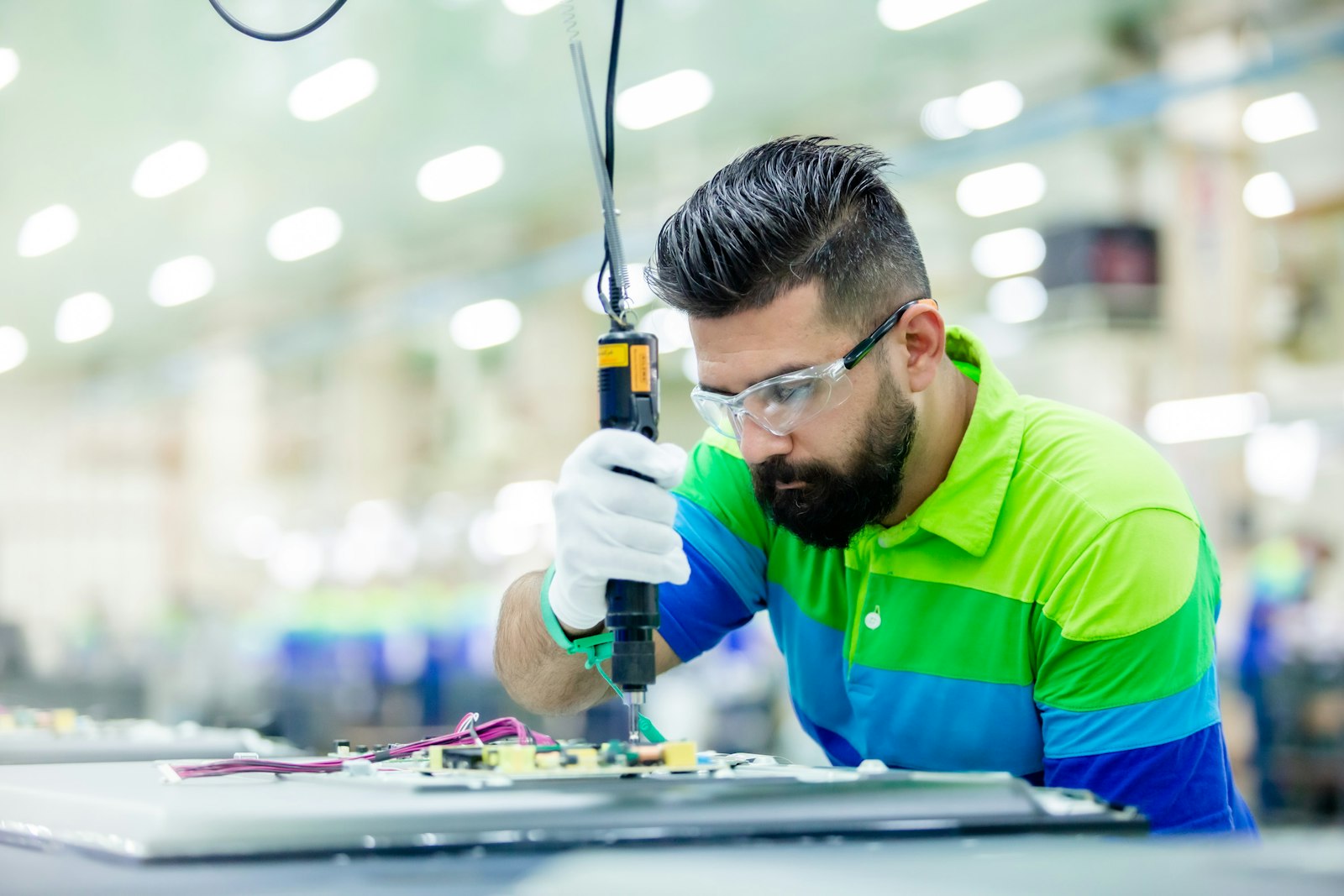
Return on investment matters when you're spending money and time on training. Not all technician paths cost the same, and neither do their starting salaries.
Welding training is often the lowest-cost entry point. Many Georgia community colleges offer six-month to one-year welding certificates for under $3,000 to $5,000. Graduates often start at competitive mid-range salaries. You could recover training costs within the first few months of work.
CNC programming requires more time and money. A full CNC program at a Georgia community college typically costs $4,000 to $8,000 and takes 12 to 18 months. Starting salaries for CNC technicians are higher, so the longer investment pays off faster over five years.
Instrumentation technician training is deeper, usually spanning 18 to 24 months and costing $6,000 to $10,000. The higher starting and five-year salaries make this a strong ROI play for someone willing to invest longer upfront. Georgia's community college system and employers often subsidize costs through financial assistance and tuition reimbursement.
Robotics training shows variable costs depending on depth. Some programs cost $2,000 to $5,000 for a short robotics certificate, while comprehensive programs run $7,000 to $12,000. Starting salaries are higher, but you often need prior technical background. Most people don't start in robotics directly.
A practical three-step approach:
Many Georgia employers subsidize continuing education for current employees. Tuition reimbursement is standard in manufacturing. The two-step approach becomes much more affordable than completing a two-year program before earning. Apprenticeships, especially union-affiliated ones, pay you while you learn. That's free training plus income from day one, though it requires longer time commitment.
Beyond the core six specializations, three emerging roles are accelerating in Georgia: advanced robotics with AI integration, semiconductor manufacturing technician, and predictive maintenance technician.
Robotics with AI Integration: As plants adopt smart automation, technicians who understand both robotic systems and AI-adjacent troubleshooting command premium salaries. These include predictive maintenance algorithms and sensor data analysis. These roles often start 15 to 25 percent higher than entry-level CNC or electrical work. Georgia's automotive and aerospace leaders are investing heavily here. Entry usually requires baseline technical background plus specialized advanced training. A technician with three to five years of CNC or electrical experience who adds AI-automation training can position themselves for these higher-paying roles within two to three years.
Semiconductor Manufacturing Technician: Georgia's semiconductor corridor around Atlanta is expanding rapidly with new fabs (fabrication plants) and packaging centers. Semiconductor manufacturing technicians work in controlled cleanroom environments operating sophisticated process equipment. They maintain yield (the percentage of chips that pass quality standards). Starting salaries in semiconductor tech exceed most other technician specializations by 20 to 30 percent. The skill gap is acute and training is highly specialized. Entry typically requires either a dedicated semiconductor technician program or a strong foundation in electrical, instrumentation, or process technology.
Predictive Maintenance Technician: This role sits at the intersection of traditional maintenance and data analytics. These technicians use vibration analysis, thermal imaging, and CMMS software to predict equipment failures before they happen. Avoiding costly unplanned downtime saves manufacturers millions. Salary is competitive with CNC and higher than entry-level maintenance. Entry requires maintenance background plus additional training in data analysis and diagnostic tools.
All three emerging specializations require foundation skills plus specialized advanced training. They're not entry-level roles, but they're realistic next steps for technicians who begin in core specializations.
Technician salary by specialization georgia varies significantly, as the comparison below illustrates.
| Specialization | Starting Salary Range | 5-Year Range | Entry Path | Typical Timeline |
|---|---|---|---|---|
| Welding Technician | Lower-to-mid | Mid-to-high | Certificate program or apprenticeship | 6 to 12 months |
| Electrical Technician | Mid-to-high | Mid-to-high | Apprenticeship or technician certificate | 12 to 18 months |
| CNC Technician | Mid-to-high | High | Community college program or apprenticeship | 12 to 18 months |
| Industrial Maintenance Technician | Mid-to-high | High | Apprenticeship or technician certificate | 12 to 24 months |
| Instrumentation and Control Technician | High | High | Community college program or short course | 12 to 24 months |
| Robotics Technician | High | Very High | Requires foundation plus specialized training | 18 to 30 months |
The highest paying technician skills georgia are instrumentation and robotics. Instrumentation typically earns $40,000 to $50,000, while robotics often starts $45,000 to $55,000 depending on employer and experience. Highest-paying varies by what you measure: starting salary, five-year growth, or job stability. Robotics shows the fastest growth; maintenance shows the strongest stability during downturns.
Timelines vary significantly:
Some technicians earn apprenticeships while working (paid from day one, though the full credential takes three to five years). Unmudl offers compressed training paths that reduce timeline to weeks for specialized skills.
Not always, but it helps significantly. Most employers prefer candidates with certifications like MSSC CPT, AWS (welding), or OSHA safety credentials. Some hire based on hands-on experience alone, especially if you worked in manufacturing or heavy equipment repair. Certifications increase your starting salary and job mobility, so pursuing them early pays off.
BLS data projects manufacturing employment to remain stable through 2034, though automation may reduce some roles. Technicians who maintain, program, and troubleshoot automation systems see steady to growing demand. Maintenance, CNC, and robotics roles are all hiring consistently in Georgia right now.
Start with welding, electrical basics, or maintenance technician roles. These are the most accessible entry points and often have the most available jobs in your region. Once employed and earning, many technicians upskill to CNC, instrumentation, or robotics within two to five years. Your employer may subsidize that additional training through tuition reimbursement.
Yes, and many technicians do. An electrical technician can transition to instrumentation or robotics with supplemental training. A CNC programmer can move into tooling engineering or maintenance supervision. The foundation skills transfer, so your first specialization isn't a lifelong commitment. It's a starting point for growth.
Choosing a specialization comes down to three questions.
First, what's your technical aptitude and interest? A person who loves working with code and precision should lean CNC or robotics. Someone who prefers hands-on troubleshooting fits maintenance or electrical. A person drawn to the craft of joining metal fits welding. Interest matters as much as salary. You'll develop deeper expertise in work you actually like.
Second, what's your timeline? If you need to earn money in six months, welding or basic electrical is realistic. If you can invest 18 to 24 months before stepping onto a plant floor, you can aim for CNC or instrumentation with higher starting pay. If you're already working and can train part-time, an apprenticeship might suit you perfectly.
Third, what's happening in your region? Check Georgia job boards for what's hiring in your area right now. Manufacturing Georgia offers region-specific wage and hiring data that can guide your decision. A specialty booming in Atlanta might be slower in rural areas.
The highest salary doesn't always mean the best choice for your life right now. A welding job you can start in six months and enjoy, earning solid money while you learn more, beats a CNC path you start later and resent. Choose based on aptitude, interest, timeline, and local opportunity. The salary growth will follow.


