
.svg)
You've completed your technician training and have job offers from two plants — one in Atlanta offering $52,000, one in Macon offering $46,000. Both sound like real money until you check rent prices. In Atlanta, a two-bedroom apartment runs $1,600 monthly. In Macon, the same apartment costs $850. That $6,000 annual gap disappears in housing alone.
Salary discussions often ignore this cost-of-living reality, leaving technicians to negotiate blindly. If you're a Georgia-based technician (or considering becoming one), comparing manufacturing wages across metros — and understanding what those wages mean in real dollars — is essential. The answer varies by metro, by specialization, and by how quickly you build certifications and experience.
This guide breaks down 2026 salary data for Georgia's major manufacturing hubs: Atlanta, Savannah, Augusta, and Macon. We'll walk through what technicians earn, which specializations command premium pay, how local cost of living changes the picture, and what path gets you from entry-level roles to senior earning potential. Whether you're in high school exploring career pathways, a career-changer, or an established technician looking to negotiate, real numbers matter.
Georgia's manufacturing technicians earn different salaries depending on where they work. Atlanta commands the highest wages, while Macon and Augusta offer substantially lower living costs. Understanding these regional differences is crucial when comparing job offers.
Atlanta: premium wages and premium living costs. The Atlanta metro offers Georgia's strongest technician opportunities. Facilities in Marietta, Alpharetta, and suburban counties hire for automotive, aerospace (Lockheed Martin), semiconductors, and advanced manufacturing. Entry-level technician roles typically start in the mid-$40K range; experienced specialists progress to $60K and beyond. Atlanta's cost of living runs 15–25% above the state average, making the wage premium necessary.
Savannah: mid-range pay, growing demand. Savannah's port-adjacent manufacturing economy creates steady demand for technicians across shipbuilding, logistics, food processing, and marine-related work. Wages tend to fall in the mid-range: entry positions around $40K, progressing to $55K for experienced technicians — often better real value than Atlanta without the sacrifices of rural life.
Augusta: solid opportunities and lower costs. Augusta's medical-device manufacturing, automotive suppliers, and industrial base generate solid technician opportunities. Salaries run similar to Savannah (entry-level $40K to mid-$55K for experienced roles), with cost of living slightly below the state average. Employers like ScanSource and contract manufacturers provide stable job markets and clear progression paths.
Macon: emerging hub with strong value. Macon has emerged as a manufacturing growth hub in recent years. Entry-level technician roles start at $38K–$42K, and cost of living is roughly 30–35% cheaper than Atlanta overall. A technician earning $44K in Macon has more real purchasing power than one earning $55K in Atlanta once you factor in housing, utilities, and day-to-day expenses.
One critical caveat: these ranges assume general maintenance or production technician roles. Specialists, CNC programmers, instrumentation technicians, and certified welders earn considerably more across all metros.
Your specialization shapes your earning potential as much as your location does — sometimes more. A general maintenance technician and a CNC programmer with identical years of experience often earn $10K–$15K apart annually.
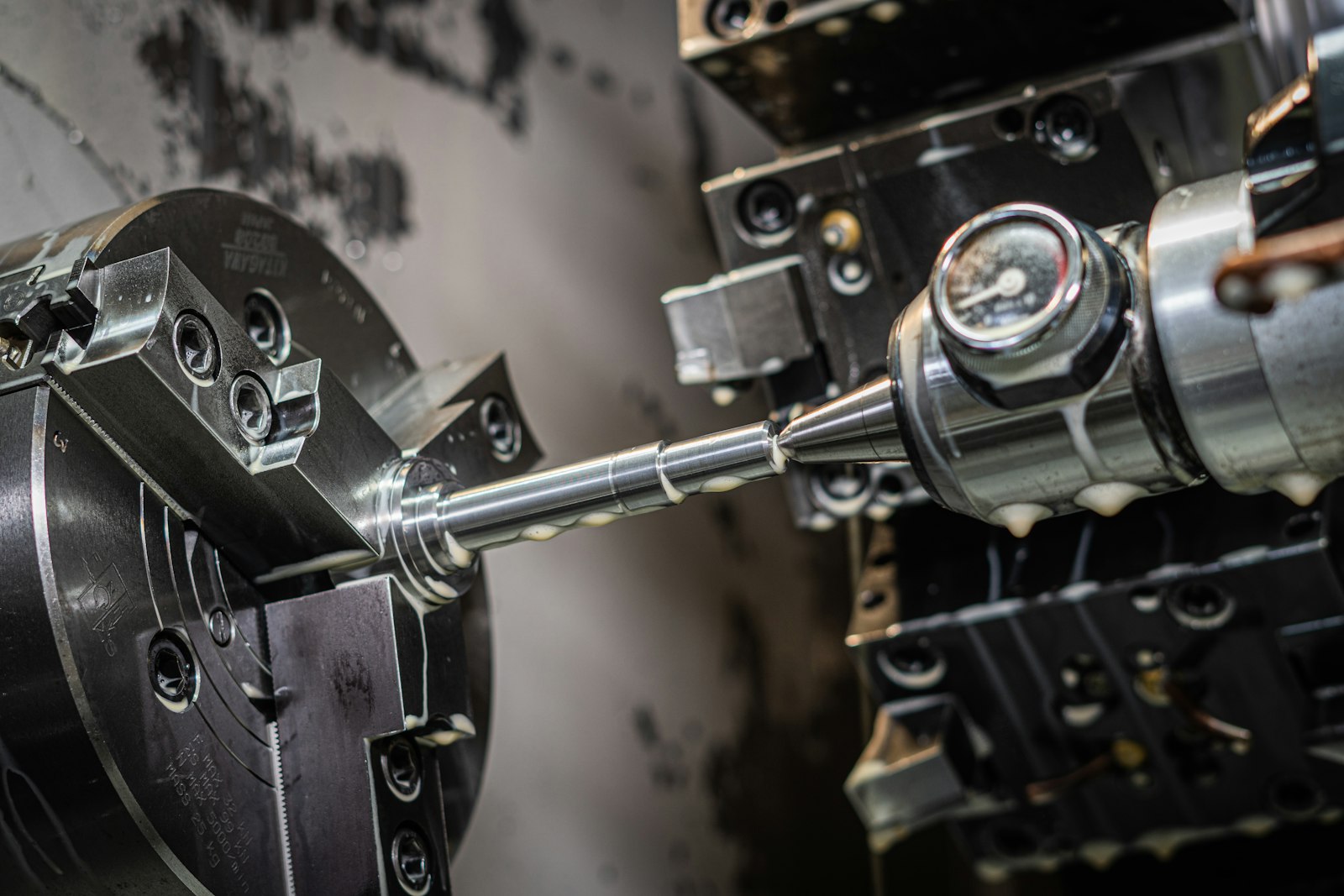
CNC work ranks among the highest technical specializations in manufacturing. Entry-level CNC operators (running programs on existing machines) start around $42K–$48K. CNC programmers, who write and optimize tool paths, earn $52K–$68K depending on metro and complexity. Specialization in 5-axis machining or Swiss-style turning adds an additional premium. The gap exists because writing code for precision parts requires deep technical knowledge that takes years to build.
Certified AWS professionals doing aerospace, pressure-vessel, or nuclear work reach $50K–$62K, especially in metros like Savannah and Atlanta. A stick or MIG welder doing structural work might start at entry-level rates ($38K–$42K). AWS (American Welding Society) certification matters enormously — it's the difference between a commodity skill and a specialized credential.

Electrical and instrumentation technicians work with electrical systems, PLCs, SCADA controls, and sensor networks, occupying the middle-to-premium tier. Entry typically requires NATE, EPA 608 (refrigeration), or manufacturer-specific training. Salaries start around $46K and progress to $60K–$70K for senior or lead roles. Georgia's shortage of skilled electricians keeps these wages competitive. Technicians with Instrumentation and Control Technician training often accelerate into this tier faster.
Maintenance pay varies based on scope and specialization. General maintenance roles start at $38K–$42K. Predictive-maintenance specialists using CMMS software, vibration analysis, thermal imaging, and condition monitoring earn $52K–$60K because they prevent costly breakdowns. CMRP (Certified Maintenance & Reliability Professional) status can add 20–30% to earnings — a jump from $50K to $62K, well worth the investment.
Raw salary numbers tell only part of the story. A $52K salary in Atlanta evaporates faster than a $44K salary in Macon. Cost of living — housing, food, utilities, insurance, and transportation — matters enormously when comparing real financial outcomes.
| Metro | 2-Bedroom Rent | Monthly Take-Home | Fixed Costs | Disposable Income | Value Rating |
|---|---|---|---|---|---|
| Atlanta | $1,400–$1,700 | $3,800 (from $55K) | ~$2,700 | ~$1,100 | Lower |
| Savannah | $1,200–$1,400 | $3,400 (from $50K) | ~$2,230 | ~$1,170 | Moderate |
| Augusta | $900–$1,150 | $3,200 (from $47K) | ~$1,810 | ~$1,390 | Higher |
| Macon | $750–$950 | $3,000 (from $44K) | ~$1,590 | ~$1,410 | Highest |
Do the math for Atlanta: a technician earning $55K gross takes home roughly $3,800 monthly. Subtract $1,600 rent, $400 groceries, $200 utilities, $300 car costs, and $200 insurance — about $2,700 in essentials — leaving roughly $1,100 for childcare, loans, savings, and everything else. Savannah splits the difference: a $50K salary nets about $3,400, with fixed costs near $2,230, leaving about $1,170. Augusta improves again — a $47K salary nets roughly $3,200 with fixed costs near $1,810, leaving about $1,390.
Macon offers the strongest cost-of-living ratio for working technicians. Rent averages $750–$950 for a two-bedroom, nearly half Atlanta's cost. A $44K salary takes home roughly $3,000, with fixed costs near $1,590 — leaving roughly $1,410 for savings, dependents, and building wealth. A $44K job in Macon often leaves you with more disposable income and better emergency savings than a $55K job in Atlanta. When comparing offers across metros, always calculate take-home and living expenses — don't just look at the salary line.

Your first technician paycheck isn't your ceiling — it's your starting point. Understanding realistic progression helps you set earning goals and make strategic decisions about certifications and specialization.
Most technicians start around $38K–$44K regardless of metro or role while learning plant procedures, safety protocols, equipment, and company culture. Expect annual raises of 2–4% as you move from supervised work to more autonomous tasks. By the end of year two, you might reach $41K–$47K — modest growth, but you're building the experience foundation that justifies bigger jumps later.
This is when certification and specialization accelerate your pay meaningfully. A technician who earns NATE, MSSC CPT, or NCCER credentials can negotiate a jump to $48K–$56K. A CNC operator who learns programming earns more; a maintenance tech who obtains CMMS certification adds measurable value. Raises accelerate to 4–6% annually as employers compete to keep trained staff.
Experienced technicians transition to lead, senior, or mentoring positions, and salary ranges widen to $55K–$70K. A certified CMRP technician managing predictive-maintenance programs sits in the upper half, as does a master welder training apprentices. Employers often add performance bonuses and profit-sharing at this level.
The top tier includes plant maintenance managers, reliability engineers, and technical specialists in high-demand fields, reaching $70K–$95K and beyond. These roles require deep experience plus multiple certifications (CMRP, ASE Master, manufacturer-specific credentials) and proven leadership or training ability. Technicians who intentionally pursue certifications and move into lead roles earn 40–80% more over a decade than those who stay in entry-level roles — a difference that compounds over a 30-year career.
Salary is only part of what you earn. Health insurance, retirement matching, shift differentials, bonuses, and tuition reimbursement often add 15–25% to your total compensation.
Health insurance is standard at manufacturing plants of any size. Larger employers (Amazon, Intel, automotive suppliers) offer family plans with modest deductibles ($500–$1,500). If Employer A pays $50K salary plus a $6K–$8K health subsidy, you're really earning $56K–$58K in total compensation.
Retirement matching varies by employer. Larger companies typically match 3–5% of your 401(k) contributions; a technician earning $50K with a 4% match receives an additional $2,000 annually that compounds substantially over 30 years.
Shift and overtime premiums are common at plants running multiple shifts. Evening shift typically pays 8–10% above day shift, night shift 12–15% more, and overtime pays time-and-a-half. A $50K day-shift technician can reach $65K–$75K with regular night-shift work or consistent overtime.
Performance and safety bonuses appear at well-run plants — $500–$2,000 quarterly for zero safety incidents, plus annual bonuses of 2–8% of base salary tied to results.
Tuition reimbursement is increasingly standard, covering CMMS training, NATE certification, community-college courses, or manufacturer training — worth $2,000–$5,000 annually if you're actively pursuing credentials. A $50K technician receiving a $6K health subsidy, $2K retirement match, 10% shift premium, and $1K safety bonus is actually earning $59K–$62K in real annual value. Always request the full total-compensation breakdown when comparing offers.
You have more leverage than you might think. Manufacturing plants face real technician shortages, especially for certified specialists — and that changes the entire conversation.
Before you interview, research realistic ranges for your metro and role. Check BLS data, ask technicians in online communities or local networks, and talk with instructors at community colleges. Understanding what the market actually pays prevents you from accepting lowball offers out of fear.
During interviews, ask directly: “What's the salary range for this role?” and “What does total compensation include?” Don't volunteer your previous salary — that anchors negotiations downward. Instead: “I'm looking for compensation aligned with market rates for [your specialization] in the [metro] area.”
Certifications are your leverage. An MSSC CPT, NATE, EPA 608, or CMRP credential is worth $3,000–$8,000 annually in the market. If you hold it, mention it explicitly. If the employer will pay for it, quantify that: “I'll earn NATE certification within six months — are you willing to add certification reimbursement to the offer?”
Negotiate non-salary terms. If Offer A pays $50K with no tuition reimbursement and Offer B pays $48K with $3K annual tuition reimbursement plus a 5% 401(k) match, the second offer is worth more in total value. Negotiating 5–8% above the opening offer is normal and rarely costs you the job — Georgia's technician shortage means employers expect negotiation and budget for it.
| Technician Role | Entry-Level | Mid-Career (5–8 yrs) | Senior / Specialized | Best Growth Markets |
|---|---|---|---|---|
| Maintenance Technician | Below $45K | $50K–$65K | $65K–$80K+ | Atlanta, Savannah |
| CNC Operator / Programmer | $45K–$50K | $55K–$70K | $70K–$90K+ | Atlanta, Augusta |
| Welding Specialist (AWS-certified) | $45K–$50K | $50K–$65K | $65K–$80K+ | Savannah, Atlanta |
| Electrical / Instrumentation Technician | $50K–$55K | $60K–$75K | $75K–$95K+ | Atlanta, Augusta |
CNC technicians in Atlanta typically earn in the $55K–$72K range — higher metro density, aerospace demand (Lockheed Martin), and competition for talent drive these rates. Savannah reaches $48K–$62K for CNC roles, but lower cost of living (rent roughly 15–20% cheaper) means real take-home income is more comparable than the salary gap suggests. An Atlanta CNC programmer earning $65K takes home roughly $3,900 monthly; a Savannah technician earning $55K takes home roughly $3,500 — a smaller gap than salary alone indicates.
CMRP (Certified Maintenance & Reliability Professional), NATE, and AWS (American Welding Society) certifications typically add 15–30% to base salary. MSSC CPT (Certified Production Technician) and manufacturer-specific certifications (Siemens PLC, Fanuc CNC programming) also command meaningful premiums. The payoff timeline is usually 2–5 years, and the certification cost is offset by salary increases well before that window closes.
Yes, substantially. Night shift typically pays 12–15% more than day shift, and overtime (hours beyond 40 per week) pays time-and-a-half. A technician working night shift and averaging 5–10 hours of overtime weekly can earn $15K–$25K more annually than a day-shift, 40-hour technician in the same role. The tradeoff is lifestyle — nights and weekends matter if you have family or social commitments.
Most technicians see 2–4% annual raises in years 1–2 (the learning phase). Raises accelerate to 4–6% annually in years 3–5 with certifications and specialization. Beyond year 7–10, raises often plateau unless you transition into lead, supervisory, or specialist roles — those offer earning jumps of 20–30%. Total progression from entry-level to senior typically spans 7–10 years.
Atlanta pays 15–30% higher nominal salary but has 20–30% higher cost of living and often longer commutes. Macon pays 10–20% less but has substantially lower rent, utilities, and transportation costs. For entry-to-mid-career technicians, net disposable income is often equal or better in Macon. Atlanta wins if you value career density and access to larger employers; Macon wins if you prioritize financial stability and lower stress.
CNC programming and electrical/instrumentation work command the highest pay in 2026. Aerospace-related welding (for Savannah and Atlanta contracts) is also premium-tier. Maintenance technicians with predictive-maintenance skills (CMMS, vibration analysis, thermal imaging) increasingly earn specialist wages. The premium depends on metro, employer size, and market demand — but all three specializations show strong growth.
Numbers tell one story, but opportunity tells another. Georgia's manufacturing technician roles offer real earning potential — you can only capture it if you access affordable training to qualify.
Amazon Career Choice changes the equation. It covers 95% of tuition for Amazon fulfillment-center employees (and some contract manufacturers) pursuing technician, advanced-manufacturing, or related credentials — no student debt, no out-of-pocket cost, and full pay while you train. If you're working in an Amazon FC or a facility supplying Amazon, you can move from general warehouse or production roles to CNC operations, instrumentation, or electrician roles. Courses like Instrumentation and Control Technician training can accelerate the move from $40K to $55K–$70K roles in 6–12 months of focused learning.
For technicians already in manufacturing: Georgia employers increasingly use tuition reimbursement and upskilling as retention tools. If your current employer doesn't offer it, negotiate for it — a CMRP or specialized certification is worth $4K–$8K annually, and employers budget accordingly.
Start by understanding what your region pays, then learn which credentials command premium compensation — and take action. Explore manufacturing careers and regional demand on Manufacturing Georgia, and browse technician training options on Unmudl to find skill paths that fit your timeline and goals. Your next opportunity is waiting.


