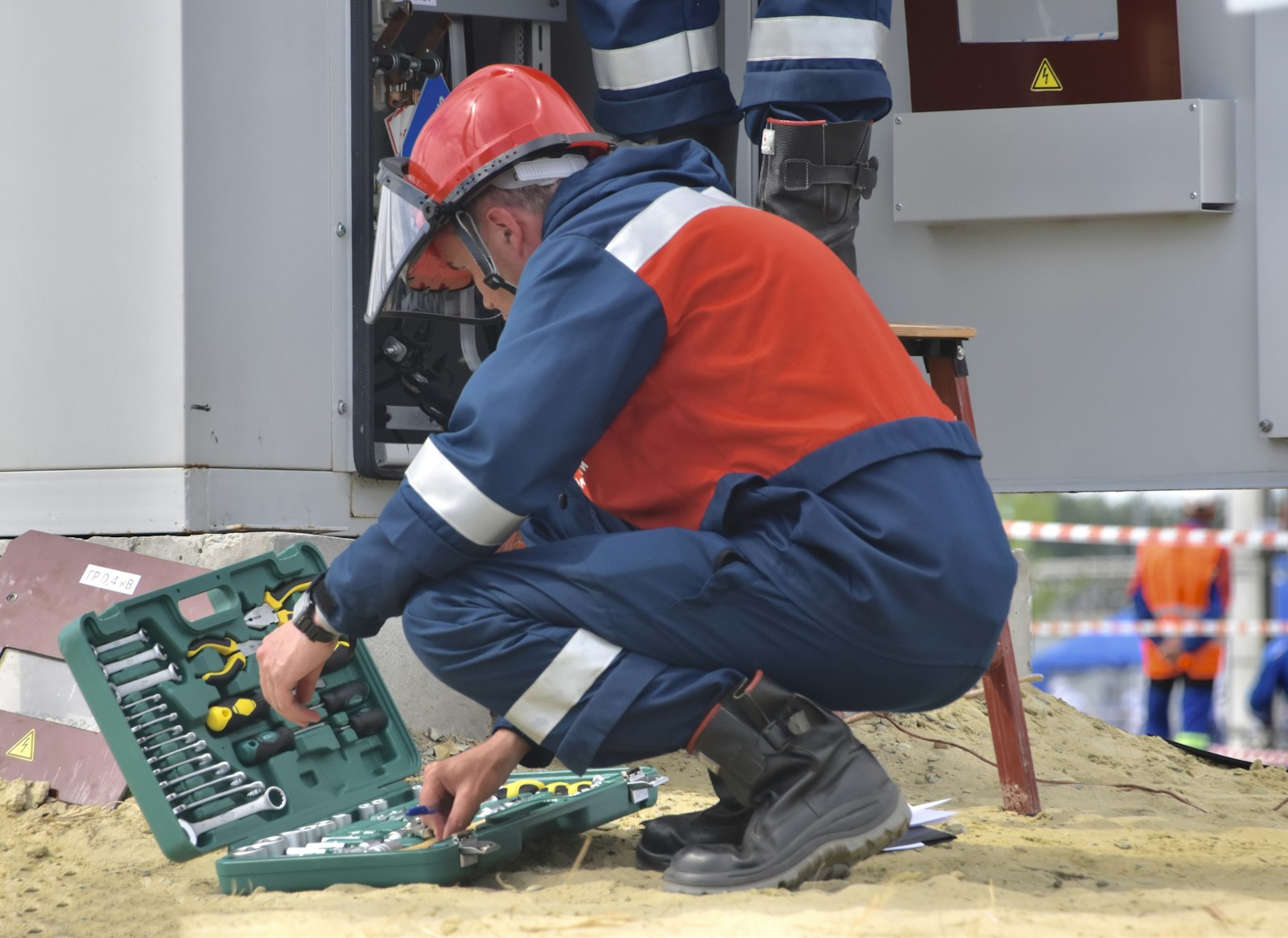

You're a skilled technician in rural Georgia, and you've been offered a job at a major plant outside Atlanta. The paycheck is 20% higher. But should you move? The relocation costs, higher rent, and longer commute are real. Meanwhile, a growing flooring manufacturer near Dalton offers stable work with lower expenses, but fewer advancement options. And what about the opportunities at Kia's suppliers near West Point?
This is the decision Georgia's manufacturing workforce faces in 2026. Manufacturing opportunities vary dramatically by city across the state. Atlanta offers diversity and scale. Dalton dominates carpet and textile equipment. West Point anchors automotive supply chains. Savannah specializes in port and aerospace manufacturing. Macon anchors central Georgia's industrial clusters. For a working adult deciding where to relocate, train, and build your technician career, the answer isn't one-size-fits-all. It depends on salary expectations, cost of living, job density, and how quickly you can land a role. This regional guide compares manufacturing jobs across Georgia's five major economic zones, real salary ranges by city, and the training pathways that accelerate your hire at scale.
Atlanta's manufacturing footprint extends far beyond the city limits. The metro region anchors everything from aerospace component fabrication to automotive logistics and industrial equipment. Major companies include Gulfstream Aerospace, Delta Air Lines' logistics hub, and dozens of automotive suppliers. If you're looking for job density and advancement options, Atlanta concentrates them better than any other Georgia city.
Technician roles span CNC machining, mechatronics, maintenance control, and quality assurance. The competition for entry-level positions is steeper here than in smaller cities. But wage growth accelerates once you're hired and build credibility (which matters). Mid-career technicians with specialized certifications (CMRP, Certified Maintenance and Reliability Professional) command salaries in the upper range for the state. Many Atlanta technicians advance to supervisory or technical specialist roles within 5-7 years.
Cost of living in Atlanta is higher. Rent for a one-bedroom apartment near a manufacturing hub runs roughly 35-45% more than Dalton or Columbus. Commutes from suburbs to industrial parks range 30-60 minutes, depending on your home location and shift start times. Public transit covers some commute routes, but personal transportation is often necessary for technicians working varied shifts.
Where to train: Unmudl's Mechatronics and Robotics Maintenance course prepares you for advanced manufacturing roles in the Atlanta metro. Foundations of Automated Equipment Maintenance serves as an entry point if you're new to the field. Both are designed to align with employer demand across the region.
Atlanta suits you if you want career acceleration, diverse industry exposure, and the highest earning potential in Georgia. The trade-off is higher expenses and stiffer competition at entry level. Plan for 2-3 months of job searching after relocation, even with completed training.
Dalton, Georgia is the carpet capital of North America. Carpet manufacturing, flooring production, and textile equipment dominate the regional economy. Major employers include carpet mills, flooring equipment manufacturers, and logistics suppliers serving the industry. If you're interested in a manufacturing sector with deep roots, established employers, and strong technician networks, Dalton is the gateway (and you won't face the Atlanta job-market intensity).
Technician roles here lean toward equipment maintenance, production operation, and process control. Unlike Atlanta's industry diversity, Dalton's technician economy clusters around one sector. That focus creates tight communities and mentorship pathways, but fewer lateral-move opportunities if your interests shift. A technician who spends 5+ years in Dalton building expertise in flooring equipment becomes invaluable to that industry, but has fewer options outside it.
The advantage is real: cost of living is significantly lower. Rent and housing costs run 30-40% below Atlanta. Commutes are shorter. Your paycheck stretches further, and the savings rate for a technician earning $48k-$55k annually is higher than an Atlanta peer earning $55k-$62k with substantially higher expenses. If you prioritize savings and financial stability over maximum earning potential, Dalton accelerates your path to home ownership and financial independence.
The trade-off: wage ceilings are slightly lower, advancement paths are narrower, and a downturn in flooring demand affects the entire region at once. Technicians who stay 5+ years often move to Atlanta or out of state to chase higher salaries.
Where to train: Foundations of Automated Equipment Maintenance is popular among Dalton employers because it covers the core skills carpet and textile equipment technicians need. The Dalton Workforce Development Board partners with local manufacturers to prioritize equipment-maintenance pathways. Many trainees land roles within 3-4 weeks of course completion.
Dalton suits you if you want lower cost of living, strong technician networks, and stable work in an established industry. Ideal for technicians prioritizing savings and community over maximum earning potential.

West Point, Georgia, and the surrounding Columbus area represent the regional wage premium in Georgia's manufacturing map. Southwire Company, one of the nation's largest wire and cable manufacturers, operates its headquarters and major production facilities here. Surrounding counties host automotive suppliers, metal fabrication shops, and industrial equipment manufacturers. The economic concentration creates tight job markets but commanding salaries that compete with Atlanta despite lower living costs.
If you secure a technician role with Southwire or a Tier-1 automotive supplier, your earning potential jumps notably compared to Dalton or even comparable parts of Atlanta. Maintenance technicians, mechatronics specialists, and equipment operators in the West Point-Columbus corridor earn salaries in the upper range, with cost-of-living adjustments that actually favor the region. A technician earning $65k in West Point has similar purchasing power to someone earning $78k in Atlanta.
Technician roles focus on heavy equipment maintenance, process control, and predictive maintenance using CMMS (Computerized Maintenance Management System) tools and sensor data to prevent downtime. Southwire, in particular, invests heavily in technician training and career paths. Many technicians at major regional employers advance to supervisory or technical specialist roles without needing a four-year degree. The company actively recruits technicians with employer-designed training credentials.
Cost of living is moderate. Rent and housing costs run 15-25% below Atlanta but slightly above Dalton. Commutes to major manufacturing hubs are typically under 30 minutes. The region's smaller size means you'll recognize faces at suppliers and other plants, fostering a collaborative technician community. Reputation spreads quickly, which accelerates your next job move if you decide to relocate later.
Where to train: Mechatronics and Robotics Maintenance aligns directly with the advanced manufacturing focus in this region. Southwire and other major employers use it to identify candidates ready for immediate deployment. Community colleges in the region also offer traditional 2-year associate programs, but employer-designed training compresses your time to hire significantly.
West Point and Columbus suit you if you want wage premiums, strong mentorship from established employers, and a smaller-city lifestyle. You'll sacrifice job diversity for job stability and earning power.
Savannah's manufacturing identity ties to the Port of Savannah and maritime supply chains. Gulfstream Aerospace manufactures business jets in nearby Savannah. Specialty chemical plants, food processing facilities, and port-related logistics operations dot the coast and inland. If you're drawn to maritime industries, aerospace support, or niche manufacturing, coastal Georgia offers distinct alternatives to the metro and textile corridors. Skilled technician jobs Dalton Georgia are plentiful, offering competitive salaries in the region's booming manufacturing sector. Many workers search for manufacturing jobs near me Georgia to find local employment opportunities. West Point Georgia manufacturing jobs offer stability and growth potential in this important industrial hub. Columbus GA hosts numerous manufacturing jobs Columbus GA with competitive pay and excellent benefits packages. Understanding technician salary by city Georgia helps workers make informed career and location decisions. Manufacturing jobs Savannah Georgia provide diverse opportunities in logistics, chemicals, and port-related industries. Evaluating your commute manufacturing Georgia choices helps identify the best location for your career.
Technician roles vary by employer. Aerospace companies demand precision and advanced certifications (though none are required for entry). Port logistics facilities prioritize equipment operation and supply-chain coordination. Specialty manufacturers may focus on chemical process control or food-equipment maintenance. The diversity means you can align your interests with your work.
Cost of living in Savannah is moderate, comparable to West Point. Salaries are solid but slightly below West Point's premium and comparable to mid-range Atlanta roles. Commutes are generally under 25 minutes within Savannah proper, a major quality-of-life advantage over Atlanta.
The region's smaller technician pool means less competition for entry-level roles. If you're relocating from out of state, Savannah's lower density of technician job seekers can work in your favor. But career advancement often requires relocating to Atlanta or other metros. It's a solid entry point if you're new to manufacturing.
Where to train: Unmudl's training courses serve Savannah-based employers. The Savannah Technical College workforce development office coordinates with regional manufacturers to align training with demand. Explore both employer-designed and community college options to see which aligns with your target employer.
Savannah suits you if you're interested in aerospace, maritime, or specialty manufacturing. It's less competitive at entry level but offers fewer long-term advancement paths within the region.

Macon sits at the crossroads of central Georgia's industrial economy. The city anchors machinery manufacturing, industrial equipment, distribution centers, and logistics. Several mid-sized manufacturers operate regionally, creating steady demand for maintenance and equipment technicians. Macon offers a middle ground: more opportunities than Savannah or Dalton, lower competition than Atlanta, and moderate cost of living.
Technician roles span equipment maintenance, production support, and logistics coordination. The wage premium is modest compared to West Point but higher than Dalton. Cost of living is below Atlanta, making Macon attractive for technicians seeking balance between career opportunity and financial stability.
The region has less concentrated employer power than Dalton or West Point. That means more flexibility if you want to move between employers, but also less mentorship depth within a single industry. Macon's technician community is smaller, so networking is easier but advancement paths are more limited. Many Macon technicians use it as a 3-5 year stepping stone before relocating to Atlanta or West Point.
Where to train: Macon's workforce development board partners with local manufacturers. Unmudl's foundational courses align with regional demand. Community college options are also strong in the area.
Macon suits you if you want moderate opportunity, affordable living, and a less competitive entry-level job market. It's a solid choice for technicians willing to relocate to Atlanta or West Point after building experience.
Comparing wage and job density across Georgia's manufacturing regions helps you weigh relocation trade-offs. The following table shows qualitative salary ranges by city, entry-point opportunities, and job growth outlook for 2026. These figures are informed by BLS Occupational Outlook Handbook trends for manufacturing technicians and regional wage surveys; actual salaries vary by employer, experience, and certification level.
| City/Region | Entry Salary Range | Mid-Career Salary Range | Job Density | Cost of Living Index | Commute (avg.) |
|---|---|---|---|---|---|
| Atlanta Metro | $32k-$40k | $50k-$68k | High (most openings) | 105 | 30-60 min |
| Dalton | $30k-$37k | $45k-$58k | Moderate | 75 | 15-30 min |
| West Point/Columbus | $35k-$43k | $55k-$72k | Moderate-High | 85 | 15-30 min |
| Savannah | $33k-$41k | $48k-$65k | Moderate | 88 | 15-25 min |
| Macon | $31k-$38k | $46k-$62k | Moderate | 80 | 15-25 min |
Job Growth and Demand:
Atlanta's manufacturing sector continues to diversify, attracting automotive, aerospace, and logistics companies. New plant openings mean steady entry-level demand, though competition is high. Mid-career technicians find advancement roles, but you'll compete with relocating technicians from other states who bring experience.
Dalton's job market is stable but not expanding. Flooring demand fluctuates with housing cycles. Technician openings are consistent, but wage growth stalls without relocation or specialization. Loyalty to a single employer pays off in Dalton, tenure matters.
West Point and Columbus have the strongest wage-to-opportunity ratio for 2026. Southwire's continued investment and automotive supplier expansion create pathways for both entry-level and mid-career technicians. Job security is solid. New hires rarely face layoffs unless major plant shutdowns occur (uncommon in this region).
Savannah's aerospace and port sectors are stable. Opportunities exist but are fewer than Atlanta or West Point. Wage growth often requires relocating to another metro for advancement.
Macon's industrial economy is steady but not growing rapidly. It's a stable entry point, not a destination for rapid career growth.
The Relocation Math:
Moving for a manufacturing job makes financial sense if your salary increase exceeds your cost-of-living increase by at least 10-15%, plus relocation costs. A technician earning $50k in Dalton considering a $58k role in Atlanta needs that higher Atlanta salary to justify 35% higher rent, plus moving expenses totaling $2,000-$4,000. Over 5 years, the math favors Atlanta. Over 2 years, it's break-even.
See your technician workforce ROI
Before relocating, use a cost-of-living calculator to compare take-home pay across Georgia cities. Then explore technician training at Unmudl to align your skills with regional employer demand and accelerate your hire.
The real question isn't which city has the highest salary. It's which city gives you the best financial outcome after accounting for moving costs, housing, taxes, and commute. Here's how to calculate your relocation ROI (and avoid moving for the wrong reasons).
The Math:
Start with annual salary difference. If you're earning $50k in Dalton and offered $57k in Atlanta, that's a $7,000 gross increase. But gross isn't take-home.
Next, calculate cost-of-living differences. Atlanta rent is roughly 35% higher. If you're paying $900 in Dalton and $1,225 in Atlanta, that's an extra $3,900 annually. Add utilities, groceries, and transportation (higher transit costs, longer commute). Your total cost-of-living increase might be $5,500-$6,500 per year.
Your actual take-home gain drops to roughly $500-$1,500 annually. Moving costs (truck rental, deposits, initial setup) might run $2,000-$4,000. You're looking at 2-4 years to break even before Atlanta starts delivering net financial gain.
The calculus changes if:
Longevity Matters:
If you're planning a 1-2 year stint, relocation is a financial wash. If you're settling somewhere for 5+ years, wage growth and career advancement justify the short-term cost. A technician relocating to West Point at $58k with a clear path to $68k in 3 years breaks even on relocation costs and comes out ahead financially over a 5-year horizon.
The Hidden Benefit:
Regional manufacturing networks and employer reputation matter more than spreadsheets show. Relocating to a strong technician market (Atlanta or West Point) accelerates your next career move. Your reputation spreads faster. Employers recruit you directly. That network value exceeds the math on paper. After 5 years in Atlanta, you'll have more job offers than you can handle. After 5 years in Dalton, you'll know everyone in flooring but lack options outside the industry.
Whether you're relocating or staying put, skill-building accelerates your hire and earning potential. Georgia technicians have two primary pathways: traditional community college associate degrees (two years) and employer-designed training courses (weeks to months).
Employer-Designed Training: Fast Track to Hire
Unmudl's manufacturer-designed courses compress entry-to-hire timelines significantly. Foundations of Automated Equipment Maintenance is a foundational entry point covering hydraulics, pneumatics, electrical basics, and CMMS (Computerized Maintenance Management System software). Most working adults complete it in 8-12 weeks while maintaining other commitments.
Mechatronics and Robotics Maintenance is designed for advanced manufacturing roles, especially in automotive and industrial equipment. It covers PLC (Programmable Logic Controller) programming, robotic systems, and predictive maintenance fundamentals. Employers use this course to identify candidates ready for immediate deployment. If you're targeting West Point's automotive suppliers or Atlanta's advanced manufacturing plants, this course directly aligns with their hiring criteria.
Smart CNC Machinist serves precision-manufacturing roles. It's ideal if you're interested in custom fabrication, aerospace component work, or high-tolerance manufacturing. Savannah's aerospace suppliers and Atlanta's precision shops actively hire CNC technicians with this training.
Traditional Community College Path:
Georgia's community colleges offer two-year associate degrees in industrial maintenance, mechanical engineering technology, and related fields. This path is thorough, includes foundational academics, and is widely recognized by all employers. The trade-off: two years versus weeks to months for employer-designed courses. Some employers accept either path equally; others prioritize employer-trained candidates because they're job-ready on day one.
Financial Assistance:
Check whether your target employer offers tuition reimbursement or training subsidies. Many Georgia manufacturers cover training costs in exchange for a service commitment (typically 1-2 years). Financial assistance options are available for eligible learners at community colleges and through workforce development boards.
Next Step:
Identify your target city and employers. Then research which training pathway they prioritize. Employer-designed courses accelerate your timeline; community college provides deeper grounding. Many technicians do both, starting with employer-designed training, then pursuing an associate degree while employed (part-time study). That combination gives you speed to hire plus academic credibility.
No. Most manufacturing technician roles require a technical certificate or industry certification, not a degree. Employers value hands-on skills and equipment knowledge. Certifications like CMRP (Certified Maintenance and Reliability Professional) and equipment-specific training from manufacturers often matter more than academic credentials. Your training pathway and demonstrated competency count most. Many technicians without college degrees earn more than those with degrees but no hands-on training.
Atlanta offers more job openings, higher wage ceilings, and career mobility across industries. Dalton offers stability, lower cost of living, and tight technician networks within flooring and textile manufacturing. Salary entry points are similar ($32k-$40k in Atlanta, $30k-$37k in Dalton), but Atlanta's mid-career growth is steeper. Dalton prioritizes longevity and employer loyalty. Choose Atlanta if you want rapid advancement; choose Dalton if you want financial stability.
Yes. Georgia's technician shortage means employers actively recruit out-of-state candidates with relevant experience or training. Relocating with a completed employer-designed training course (like Unmudl's Mechatronics course) makes you immediately competitive. Expect 2-6 weeks to land a role if your skills align with demand in your target city. Atlanta may take longer due to competition; West Point and Dalton move faster.
It varies by neighborhood and category. Rent is 30-45% higher near major industrial parks. Groceries and utilities are 10-15% higher. Gas and transportation depend on commute distance (30-60 minutes is common in Atlanta versus 15-30 minutes elsewhere). Overall cost-of-living index for Atlanta is roughly 100-110 versus Dalton's 75-80. Use online calculators to compare your specific scenario: plug in your target salary, housing budget, and commute time to see real take-home differences.
West Point or Dalton. Both have established technician networks, mentorship from major employers, and strong demand for entry-level candidates. Atlanta is competitive for entry-level positions. Savannah and Macon have fewer openings. Start with employer-designed training, then apply to your target city's major employers. They'll evaluate your training, not your location. Southwire (West Point) and flooring manufacturers (Dalton) actively hire trainees.
Employer-designed training (like Unmudl's foundational courses) takes 8-16 weeks. You'll be eligible for entry-level technician roles immediately after completion. Community college associate degrees take two years. Many technicians combine both: complete employer training, get hired, then pursue an associate degree part-time while employed. That path gives you immediate income plus long-term credibility. Most employers support part-time degree completion with tuition assistance.
You started this guide asking a practical question: Where should I relocate to build a technician career? The answer depends on three factors: salary goals, lifestyle preferences, and how quickly you need to earn.
If you want maximum earning potential and career advancement, Atlanta. If you want cost-of-living advantages and community roots, Dalton. If you want wage premiums and mid-career stability, West Point and Columbus. If you're interested in aerospace or maritime work, Savannah. If you want a balanced entry point, Macon.
The decision isn't permanent. Many technicians start in one Georgia city, build experience for 3-5 years, then relocate for advancement. Your first role is about earning, learning, and building credibility. Your second role is about climbing.
Start here: Choose your target city. Identify 3-5 major employers in that city. Research whether they prioritize employer-designed training or community college credentials. Then explore Unmudl's technician training options to align your skill-building with your chosen employer's hiring criteria. Weeks of focused training now saves months of job searching later.