

.svg)
You've heard the buzz about semiconductor jobs, but you figure they're locked away in California or Taiwan. You wonder if Georgia actually has computer manufacturing roles that'll pay well and don't demand a four-year degree. The truth is more encouraging than you think.
Computer and semiconductor manufacturing is expanding rapidly across Georgia in 2026. Major employers like Kia Motors Manufacturing Georgia and tier-one electronics suppliers are building out skilled technician pipelines. These aren't distant opportunities. They're here, they're growing, and they need people. The roles are different from what you might picture. You're not sitting in a lab coat waiting for something to happen. Technicians actively troubleshoot automated equipment, inspect precision components, and keep production lines running. The work demands hands-on problem-solving, mechanical aptitude, and attention to detail. Unmudl and other training providers now offer focused pathways that get you job-ready in weeks to months, not years.
Computer manufacturing encompasses the production of semiconductors, circuit boards (PCBs), electronic assemblies, and the specialized equipment that makes it all work. It's not soldering components in a garage. It's precision industrial production at scale, often in cleanroom conditions, with automated equipment handling high-volume work while technicians keep the machines healthy and products meet specifications.
Georgia's advantage is tangible. The state has a long tradition of automotive and industrial manufacturing, which means experienced employers, established supply chains, and a workforce culture that values technical skill. Add in Kia Motors Manufacturing Georgia's $1.1 billion investment in advanced manufacturing, plus expanding operations from suppliers and equipment makers, and you've got a cluster effect. When one major employer invests, others follow.
The 2026 outlook is particularly strong for computer manufacturing technicians. Unlike some manufacturing sectors that have contracted or stayed flat, semiconductor and electronics production continues growing. The demand for domestic manufacturing capacity, driven by supply chain security concerns and government incentives, accelerates this growth. That translates directly to job openings and career stability.
What makes this attractive for you right now? Employers are willing to train. Most computer manufacturing facilities in Georgia are scaling up fast and can't wait for a perfect candidate to fall from the sky. They're looking for people with mechanical aptitude, reliability, and willingness to learn. Prior manufacturing experience helps, but it's not required. That's your opening.
Understanding the specific roles helps you target your training and understand which path fits your strengths.
PCB (printed circuit board) technicians prepare, assemble, and test circuit boards used in computers, automotive electronics, and industrial control systems. You'll work with soldering equipment, component placement tools, and inspection systems. The role requires manual dexterity, attention to detail, and an understanding of electrical basics, how current flows, why grounding matters, what voltage means. Georgia's electronics manufacturers actively recruit for this role. Entry point: high school diploma plus on-the-job training or a short technical certificate. Some employers prefer candidates with basic electronics knowledge, which Unmudl's technician programs can provide in weeks rather than semesters.
Semiconductor testing involves running diagnostic procedures on chips to ensure they function correctly before shipment. You'll operate automated test equipment, analyze results, troubleshoot failures, and document data. The work is precise and fast-paced. Mental stamina and problem-solving ability matter as much as technical knowledge. Entry point: high school diploma and either prior manufacturing experience or formal technical training. Certifications like MSSC CPT (Manufacturing Technician Certification) strengthen your candidacy.
Automation technicians maintain and troubleshoot the robots, PLCs (programmable logic controllers, essentially computers that control factory equipment), and conveyor systems that run modern lines. This is the highest-paying technician role in computer manufacturing. You need to understand mechanical systems, electrical circuits, and basic programming concepts. The learning curve is steeper, but so is the payoff. Entry point: vocational training in mechatronics, electrical maintenance, or industrial automation. Mechatronics and Robotics Maintenance (MANU 2420) is specifically designed for this track and includes hands-on equipment training compressed into months.
QC technicians use precision measuring tools, visual inspection, and testing equipment to verify that products meet specifications. You'll catch defects before they leave the facility. Strong attention to detail, basic measurement knowledge, and the ability to document findings clearly are essential. This role bridges production and engineering teams. Entry point: high school diploma plus technical training in quality assurance or dimensional metrology.
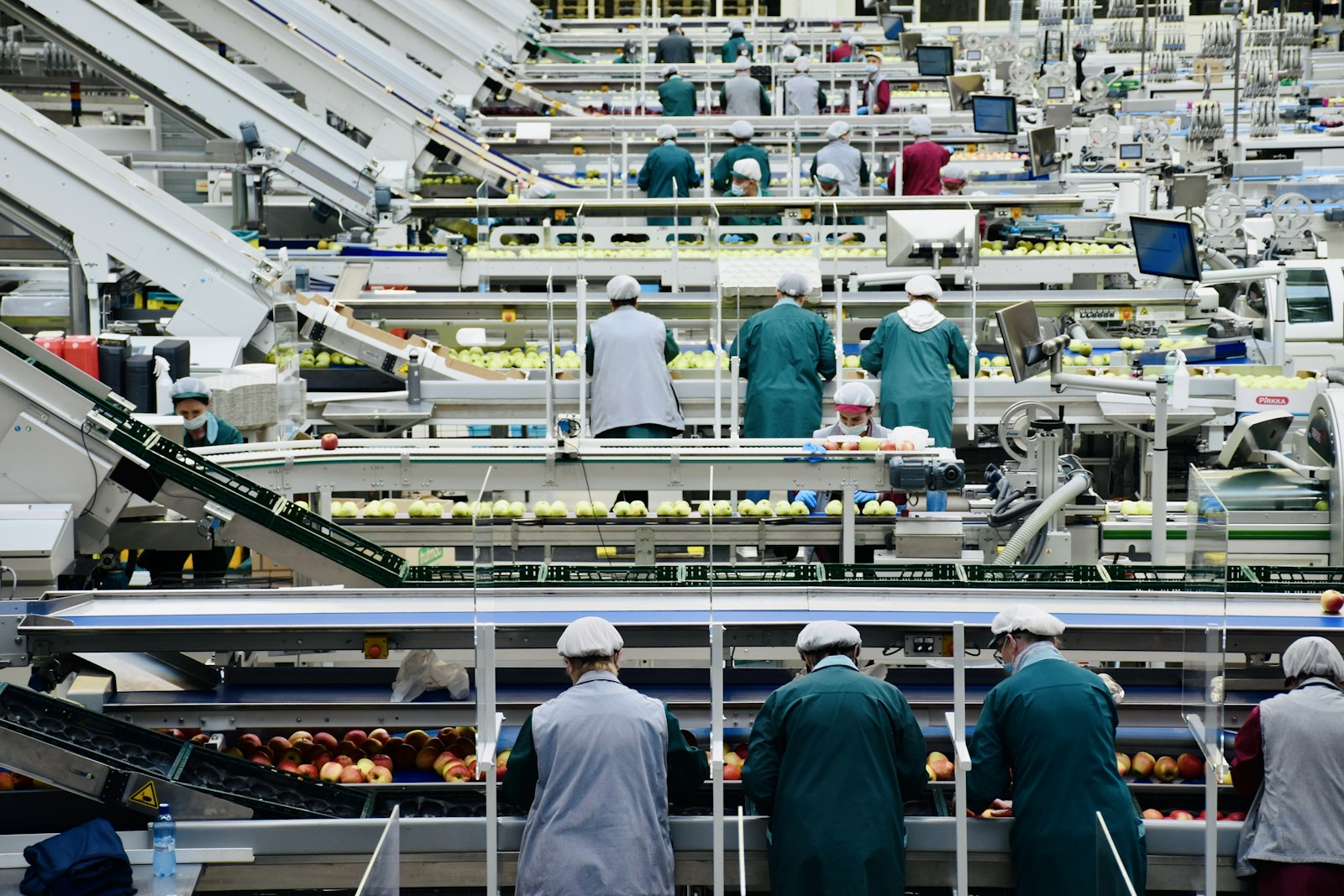
If you've worked in automotive repair, machining, HVAC maintenance, or industrial maintenance, you already own many of the skills computer manufacturing technician roles need. Understanding this crossover can shorten your path considerably.
Mechanical troubleshooting is one. Whether you're diagnosing a broken conveyor or a malfunctioning PCB oven, the process is identical: observe the symptom, isolate the system, test components, identify the root cause, and fix it. Your brain is already trained for this if you've done traditional manufacturing or maintenance work. Computer manufacturing just changes the equipment and the stakes (higher precision, tighter tolerances, faster pace).
Electrical fundamentals transfer too. Reading schematics, understanding voltage and current, using a multimeter to test circuits, these are core skills in both traditional manufacturing (motors, control systems, sensors) and computer manufacturing (circuit boards, PLCs, test equipment). The application differs, but the underlying principles are identical.
Safety discipline matters everywhere. Computer manufacturing facilities operate under strict safety and cleanroom protocols. If you're accustomed to following safety procedures, wearing PPE consistently, and respecting equipment lockout procedures, you're already halfway there. The specific rules change, but the mindset is transferable.
Equipment operation is another bridge. You've likely run CNCs, mills, lathes, or industrial machines. Computer manufacturing equipment is often more automated but still requires the same operator mindset: respect the tool, follow the procedure, keep your hands clear. The skill translates directly.
The non-obvious transfer? Data recording and documentation. Modern manufacturing everywhere demands that you log production data, document maintenance, and maintain records for traceability. Whether it's your shop floor notes or a formal CMMS (computerized maintenance management system), the habit of clear, timely documentation is valuable everywhere. Computer manufacturing values this trait highly because precision and compliance matter.
Kia Motors Manufacturing Georgia (West Point) remains the largest and most visible employer, directly employing over 3,000 workers and another 4,000+ through suppliers. Roles range from production technician to maintenance and automation support. Starting wages for technicians typically range in the low-to-mid $40K range, with advancement to $60K+ for specialized roles like automation technicians.
Beyond Kia, tier-one suppliers like Hyundai-Mobis (supplying electronics to major automakers) and Flex Ltd. (electronics manufacturing services) have expanded Georgia operations. Smaller specialized manufacturers focusing on semiconductors, circuit boards, and industrial control systems continue emerging throughout the state. Manufacturing Georgia tracks many of these employers and can direct you to opportunities in your region.
Equipment manufacturers serving the industry also hire technicians for field service, training, and support. Companies like Siemens and Rockwell Automation maintain service centers in Georgia and hire technicians to install, maintain, and troubleshoot production equipment. These roles often command premium pay (often $50K+) because the skills are scarcer and the work requires deeper technical knowledge.
The opportunity isn't limited to large employers. Hundreds of smaller shops throughout Georgia do contract manufacturing, PCB assembly, and electronics work. These smaller facilities often have tighter relationships with their technicians and faster advancement paths.
This is where computer manufacturing stands out. Technician roles in electronics assembly and semiconductor testing typically start in the $35K to $45K range for someone with a high school diploma and basic technical training. With experience and certifications, you'll reach $50K to $65K within five years. Automation technicians, who work on higher-end equipment, often start at $45K+ and easily reach $70K to $85K+ with experience.
How does this compare to traditional manufacturing? Machining technicians and CNC operators in Georgia typically start at $38K to $48K. Industrial maintenance technicians start around $40K to $55K. Computer manufacturing technician roles, particularly in automation and test equipment, tend to cluster slightly higher and advance faster. The reason is straightforward: the field is newer, the demand is more acute, and skilled technicians are scarcer.
Advancement is faster too. In traditional manufacturing, moving from entry-level to senior technician might take seven to ten years. In computer manufacturing, competent technicians often move into lead roles, specialized maintenance, or supervisory positions within four to six years. This faster trajectory reflects the growth phase of the industry. Employers are expanding quickly and need people to move up.
Benefits matter. Most computer manufacturing employers, especially Kia and major suppliers, offer health insurance, 401(k) matching, paid time off, and tuition reimbursement. Some offer shift differentials if you work evenings or weekends, which can add $3K to $5K annually. A few offer sign-on bonuses (typically $2K to $5K) to attract experienced technicians from other states.
Your pathway depends on your current background and how quickly you want to move into the workforce.
If you have prior manufacturing or maintenance experience, your fastest path is a focused technical certificate or short-format course targeting your specific role. For automation technicians, Mechatronics and Robotics Maintenance (MANU 2420) provides hands-on training in PLC programming, motor control, and equipment troubleshooting. The course is designed specifically for technicians stepping into automation roles and can be completed in a few months. Upon completion, you're job-ready and have credentials that employers recognize.
For PCB assembly and testing roles, look for electronics technician certificates that cover soldering, circuit fundamentals, and quality inspection. Foundations of Automated Equipment Maintenance (MANU 1274) bridges traditional maintenance skills into automated production equipment, ideal if you're transitioning from manual manufacturing to computer-controlled lines.
If you don't have manufacturing experience, you have two realistic options. First, enroll in a community college certificate program in electronics, industrial maintenance, or manufacturing technology. These programs are designed for people entering the field and typically take 12 to 18 months. They give you broad knowledge and employer recognition. Many Georgia community colleges offer these programs, and Georgia has strong employer partnerships that help place graduates.
Second, pursue employer-sponsored training. Some large manufacturers like Kia run their own training pipelines, hiring high school graduates and putting them through on-the-job training programs. This path takes longer (18 to 24 months to full proficiency) but costs you nothing and pays you while you learn. It's less flexible, you're committed to that employer for a set period, but the return is genuine.
For rapid upskilling, Unmudl offers short-format courses designed for working adults and people with prior experience. These aren't replacements for a full degree, but they compress months of instruction into weeks and focus on the skills employers actually need. They're particularly useful if you're already in manufacturing and want to specialize in a higher-paying track like automation. You can also explore semiconductor manufacturing and advanced tech training to dive deeper into computer manufacturing specializations.
Regardless of your path, start by understanding what roles interest you. Talk to people working in these roles. Ask about day-to-day tasks, career advancement, and what skills mattered most in their first year. Then match your training investment to those specific roles. Don't take a generic “manufacturing technician” course if you know you want to focus on semiconductors or automation. Be deliberate about your learning path.
Computer manufacturing focuses on precision electronics, semiconductors, and automated assembly of high-tech components. Traditional manufacturing emphasizes mechanical parts, metal fabrication, and industrial machinery. Computer manufacturing technicians need stronger electrical knowledge and familiarity with automated systems. Traditional manufacturing technicians rely more on mechanical troubleshooting and manual machining skills. Both offer solid wages and growth, but computer manufacturing is expanding faster and often pays slightly more in entry roles.
No. Most employers accept candidates with a high school diploma plus technical training or relevant experience. A 12- to 18-month certificate program from a community college or specialized training provider is often sufficient. Some technicians enter through employer on-the-job training programs that combine classroom learning with paid work. An associate degree is an advantage but not a requirement.
The most recognized certifications are MSSC CPT (Manufacturing Technician Certification), NATE (North American Technician Excellence) for electrical fundamentals, and specialized certifications from equipment manufacturers like Siemens or Rockwell Automation for PLC and automation work. Many employers value on-the-job experience and employer-specific training equally. Ask potential employers which certifications they prioritize before investing time and money.
Very strong. Semiconductor and electronics manufacturing has structural demand drivers: supply chain resilience, domestic production capacity building, and government incentives. Unlike some manufacturing sectors sensitive to economic cycles, computer and semiconductor manufacturing is expanding across the US. That said, automation continues advancing, so staying current with new equipment and technology is important for long-term job security.
Absolutely. Many of your skills transfer directly: equipment operation, mechanical troubleshooting, electrical fundamentals, and safety discipline. Most employers view manufacturing experience favorably, even if it's in a different subsector. You'll likely need focused technical training to fill gaps, particularly in electrical knowledge and automated systems, but you're not starting from zero. Your manufacturing mindset and work habits are valuable assets.
Demand will remain strong through the next decade. Semiconductor and electronics manufacturing are central to broader technological trends: electric vehicles, renewable energy, data centers, and AI infrastructure. Georgia's position as a growing hub attracts continued investment. Automation will eliminate some entry-level roles but create more specialized technician positions. Your competitive advantage comes from staying current with new technologies and potentially specializing in higher-value roles like automation maintenance or semiconductor process control.
Georgia's computer manufacturing sector isn't some distant opportunity reserved for people with advanced degrees. Employers across the state are hiring skilled technicians right now, and the roles pay well for positions that typically require less than two years of training. Whether you're making a career change or stepping up from entry-level manufacturing work, the technician track in computer and semiconductor manufacturing offers solid income, job security, and a clear advancement path. The growth phase means employers are motivated to train and promote from within. That's your advantage. Start by exploring what employers operate in your region and what specific roles match your strengths. Then find training that closes any skill gaps and connects you to employers actively hiring. Your next career move might be closer than you think.